The perfect espresso is the cornerstone of any great coffee experience, and finding the right machine for your home is the first step. The market is filled with options, from fully automatic bean-to-cup systems to hands-on manual levers, each offering a unique path to that rich, aromatic shot. Your ideal choice depends on your desired level of involvement, available counter space, and the specific features that matter most to you.
To help you navigate the choices for the coming year, we have compiled a detailed comparison of ten standout espresso machines. This roundup breaks down the key benefits and functionalities of each model, from compact starters to professional-grade systems, empowering you to make a confident decision for your 2025 kitchen.
Our Top Espresso Machine Picks for 2025
- Breville Bambino Plus Espresso Machine
- Breville Barista Express Espresso Machine
- Rancilio Silvia Espresso Machine
- De’Longhi ESAM3300 Magnifica Super Automatic
- Breville Barista Express Impress Espresso Machine
- De’Longhi La Specialista Maestro Espresso Machine
- Breville Oracle Touch Espresso Machine
- De’Longhi Stilosa Manual Espresso Machine
- Flair UPDATED PRO 3 (Black)
- Gaggia RI9380/46 Magenta Plus
Breville Bambino Plus Espresso Machine

The Breville Bambino Plus is designed for those who want serious espresso results without a large machine footprint. It uses a 54mm portafilter that holds up to 19 grams of coffee, which is key to achieving a full-flavored, cafe-quality extraction. Its compact size makes it an excellent choice for kitchens with limited counter space.
This machine features low pressure pre-infusion, which gradually increases water pressure at the start of the brewing process. This technique helps to ensure the coffee grounds are evenly saturated, drawing out a balanced and nuanced flavor profile from your beans. It is a straightforward and efficient machine for consistent, high-quality espresso.
Breville Barista Express Espresso Machine

The Breville Barista Express is an all-in-one solution that includes an integrated conical burr grinder. This feature allows you to go from whole beans to a freshly pulled shot of espresso in under a minute. It gives you control over the grind size and dose, which are critical factors for tailoring the taste to your preference.
Like the Bambino Plus, it utilizes a low pressure pre-infusion cycle to gently expand the coffee grounds for an even extraction. The combination of a built-in grinder and precise water pressure control makes the Barista Express a popular model for enthusiasts who want a hands-on experience without needing separate equipment.
Rancilio Silvia Espresso Machine
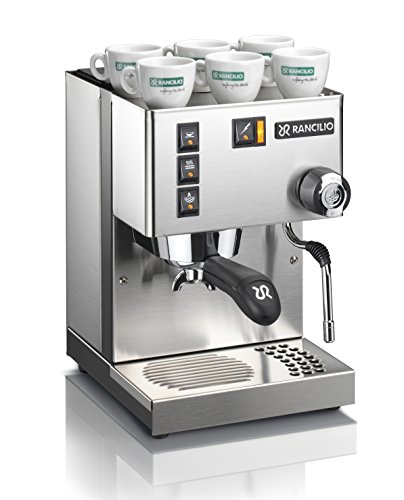
The Rancilio Silvia is built with a reputation for durability and commercial-grade components. It features a robust commercial group head, which provides superb heat stability for consistent extraction quality shot after shot. This machine is a favorite among purists who appreciate its straightforward, no-frills approach.
Its articulating steam wand offers a complete range of motion, giving you full control for texturing milk. Paired with a professional steaming knob for precise pressure control, the Silvia is capable of producing excellent microfoam for lattes and cappuccinos, making it a powerful semi-automatic machine for the dedicated home barista.
De’Longhi ESAM3300 Magnifica Super Automatic
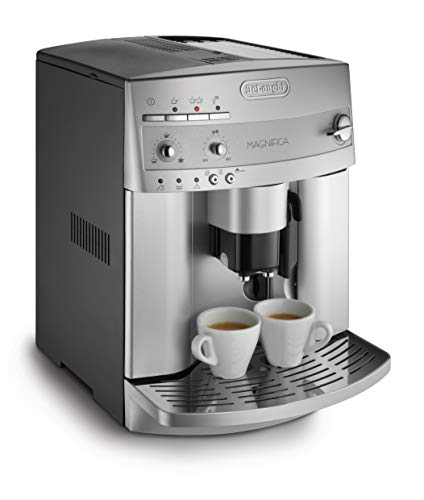
The De’Longhi Magnifica is a super-automatic machine designed for ultimate convenience. Its integrated burr grinder has 13 adjustable settings, ensuring you can achieve the perfect grind for maximum freshness with every cup. For added flexibility, it also includes a separate chamber for using pre-ground coffee.
This machine simplifies the entire process from bean to brew. The manual frother allows you to steam and froth milk to your desired texture, giving you the ability to create a variety of milk-based beverages with ease. It is an ideal choice for those who prioritize speed and simplicity in their morning routine.
Breville Barista Express Impress Espresso Machine

The Breville Barista Express Impress takes the popular Barista Express and adds an innovative automated puck preparation system. Its smart dosing system automatically calculates and adjusts the amount of fresh coffee for a perfect dose with minimal effort from the user. This feature significantly reduces the learning curve for beginners.
The Impress system auto-corrects the dose for the next shot, taking the guesswork out of manual espresso making. It combines the control of a semi-automatic machine with guided automation for key steps, making it easier than ever to achieve consistent, high-quality espresso at home.
De’Longhi La Specialista Maestro Espresso Machine

The De’Longhi La Specialista Maestro is a feature-rich bean-to-cup machine with advanced technology. It includes a built-in grinder with 15 precise settings and Smart Tamping Technology. This system uses a lever to achieve an even and consistent tamp automatically, eliminating a common variable for home baristas.
This machine uses a 19-bar Italian pump that manages pressure throughout the brewing cycle, from a gentle pre-infusion to the optimal 9 bars during extraction. With eight drink presets and even cold brew capability, the La Specialista Maestro offers extensive versatility for crafting a wide range of coffee beverages.
Breville Oracle Touch Espresso Machine
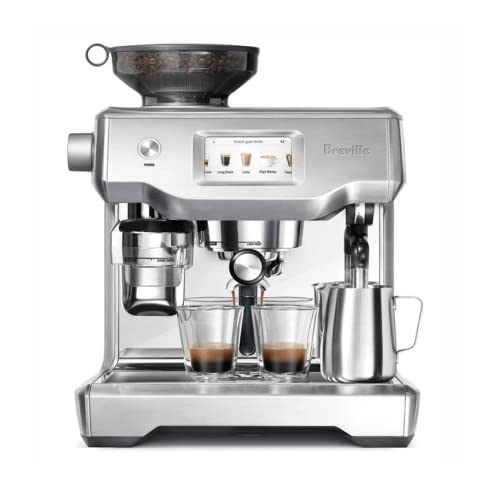
The Breville Oracle Touch represents the peak of automated home espresso systems. It features a professional dual boiler construction, allowing for simultaneous espresso extraction and milk steaming without compromise. The intuitive touchscreen interface guides you through the process for a wide variety of drinks.
This machine fully automates the most difficult steps: its integrated grinder automatically doses and tamps the perfect 22 grams of coffee directly into the portafilter. Combined with an Over Pressure Valve and low pressure pre-infusion, the Oracle Touch delivers unparalleled temperature and pressure control for a consistently excellent result with minimal manual input.
De’Longhi Stilosa Manual Espresso Machine
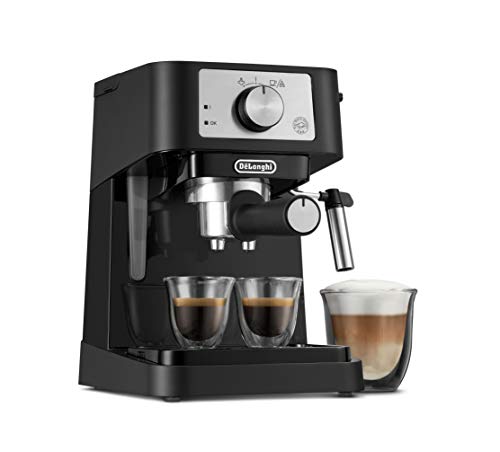
The De’Longhi Stilosa is a compact and contemporary espresso machine designed for small spaces and straightforward operation. Its 15-bar pump provides the optimal pressure needed to extract a rich and flavorful single or double espresso. The sleek design is a stylish addition to any modern kitchen counter.
This model includes a manual milk frother steam wand, giving you the tools to texture milk for cappuccinos and lattes. As an entry-level manual machine, the Stilosa offers an accessible way to begin your home espresso journey without a significant investment or complex learning process.
Flair UPDATED PRO 3

The Flair PRO 3 is a 100% manual, human-powered espresso press that offers complete control over the extraction process. It does not require electricity, making it portable and simple to use anywhere you have access to hot water. A quality burr grinder is essential for use with this manual system.
It features a custom pressure gauge with a visual “Espresso Zone” between 6-9 BAR, providing immediate feedback as you pull the shot. This allows you to precisely manage the pressure profile for a cafe-quality extraction. The updated design includes a no-preheat cylinder and an integrated shot mirror for an improved brewing workflow.
Gaggia RI9380/46 Magenta Plus
The Gaggia Magenta Plus is a super-automatic machine designed for effortless operation and consistent results. It streamlines the coffee-making process with automated grinding, brewing, and milk frothing functions. This makes it an excellent choice for households that value convenience and a variety of drink options at the touch of a button.
Built by a brand with a long history in espresso, the Magenta Plus is engineered to deliver a reliable and authentic espresso experience. Its integrated systems handle the technical details, allowing you to enjoy professional-quality coffee drinks with minimal effort and cleanup.
Buying Guide: How to Choose the Best Espresso Machine for 2025
Choosing the best espresso machine for 2025 can feel like a big task with so many options. I’ve spent a lot of time testing and researching, and the key is to match the machine to your personal routine and skill level. It’s not about getting the most expensive one; it’s about getting the one that you’ll actually use and enjoy every single day.
First, think about your budget and how much counter space you have. This will immediately narrow down your choices. Next, consider the machine type. Manual lever machines give you complete control but require a lot of practice. Semi-automatic machines are the most popular for home use because they let you control the shot time and volume, offering a great balance of involvement and convenience. If you just want a simple, fast coffee with minimal fuss, a super-automatic machine grinds, tamps, and brews at the touch of a button. For milk-based drinks, pay close attention to the steam wand. A manual steam wand, often called a Panarello, is easier for beginners, while a professional-style wand gives you more power to texture milk like a barista.
Another huge factor is the boiler system. Single boiler machines are common at lower price points, but they make you wait between brewing espresso and steaming milk. A heat exchange boiler solves this by letting you brew and steam simultaneously, which is a massive time-saver. Dual boiler machines are the top of the line, with separate boilers for brewing and steaming, ensuring perfect temperature stability for both. If you’re serious about your coffee and often make multiple drinks in a row, a dual boiler is a fantastic investment.
Don’t forget about the grinder! An espresso machine is only as good as the grinder paired with it. Pre-ground coffee just won’t cut it for quality espresso. You’ll need a burr grinder that can produce a fine, consistent powder. Many people find that buying a separate grinder gives them better results than a machine with a built-in grinder, though built-in models are incredibly convenient. Finally, think about warm-up time and programmability. Some machines need a good 10-15 minutes to heat up, while others are ready in under a minute. Programmability for shot volume is a nice feature if you want consistent results without having to manually stop every shot. By considering these factors, you can find the perfect machine to make your daily coffee exactly how you like it.
Frequently Asked Questions
What is the most important feature to look for in an espresso machine?
In my opinion, temperature stability is the most critical feature for pulling a great shot. If the water isn’t at a consistent, correct temperature (usually between 195°F and 205°F), your espresso can taste sour or bitter. Machines with a good quality boiler system, like a PID-controlled thermoblock or a traditional boiler, do a much better job at maintaining this stability than cheaper models. This is more important than a lot of flashy, extra features.
Can I use pre-ground coffee in an espresso machine?
You technically can, but I really don’t recommend it for the best flavor. Espresso requires a very specific, fine grind that you can only get from a quality burr grinder. Pre-ground coffee is often too coarse and will result in a weak, under-extracted shot. It also loses its freshness quickly. Investing in a good grinder is just as important as the machine itself for creating that perfect crema and rich taste.
How much should I expect to spend on a good quality home espresso machine?
For a reliable semi-automatic machine that will last and produce good espresso, you should expect to start around $400 to $600. This price range typically gets you a solid machine with decent temperature control. If you want features like a built-in grinder, a faster heat-up time, or the ability to steam milk and brew simultaneously, you’ll be looking in the $800 to $1,500 range. Our comparisons and reviews for the best espresso machine for 2025 cover a range of budgets to help you find the right fit.
What is the difference between a pressurized and non-pressurized portafilter?
This is a great question for beginners. A pressurized portafilter (or dual-wall) has a small hole that creates pressure artificially. It’s more forgiving if your grind isn’t perfect or if you’re using pre-ground coffee. A non-pressurized portafilter (single-wall) relies entirely on the fine, tamped coffee grounds to create the necessary pressure. This gives you more control and the potential for a better shot, but it requires a good grinder and more skill. Most enthusiasts quickly move to a non-pressurized system.
How often do I need to clean and maintain my espresso machine?
Regular maintenance is non-negotiable for taste and machine longevity. I backflush my machine with a cleaning powder about once a week, and I descale it every 2-3 months, depending on how hard my water is. The steam wand should be wiped down immediately after each use, and the drip tray and water reservoir should be rinsed daily. It sounds like a lot, but it becomes a quick part of your routine and keeps your machine running smoothly for years.