For the home barista seeking professional-quality espresso without a commercial price tag, the sub-$2000 category is a sweet spot. This budget unlocks a world of machines capable of producing cafe-level crema and perfectly textured milk. You can find everything from hands-on lever machines to fully automatic bean-to-cup centers, all designed for serious coffee enthusiasts.
Choosing the right machine depends on your desired level of involvement. Do you want the tactile control of a manual lever, the precision of a semi-automatic with a built-in grinder, or the push-button convenience of a super-automatic? Our roundup covers the top contenders across all styles, highlighting the key features that make each one a standout choice for your kitchen counter.
Our Top Picks for Home Espresso Machines
- La Pavoni PC-16 Professional Espresso Machine
- Miele CM 5510 Silence Automatic Coffee Machine
- De’Longhi EC9665M La Specialista Maestro
- Rancilio Silvia Pro X Espresso Machine
- Jura E6 Automatic Coffee Center
- Breville Barista Touch Espresso Machine
- Gaggia Classic Evo Pro Espresso Machine
- Breville Bambino Plus Espresso Machine
- Breville Barista Express Impress Espresso Machine
- Breville Barista Touch Espresso Machine
La Pavoni PC-16 Professional Espresso Machine

Experience the art of traditional espresso making with the La Pavoni PC-16. This lever-operated machine offers complete manual control over the entire extraction process, allowing you to feel the pressure and create a shot that matches your exact preference. Its solid brass boiler and attractive chrome finish provide durability and a classic, professional look for any kitchen.
The machine features a dual frothing system and a mounted pressure gauge, giving you the tools to master both espresso and milk steaming. As a machine made in Italy, it carries a legacy of espresso craftsmanship. It comes with detailed instructions and a video to help you get started on your manual espresso journey.
Miele CM 5510 Silence Automatic Coffee Machine
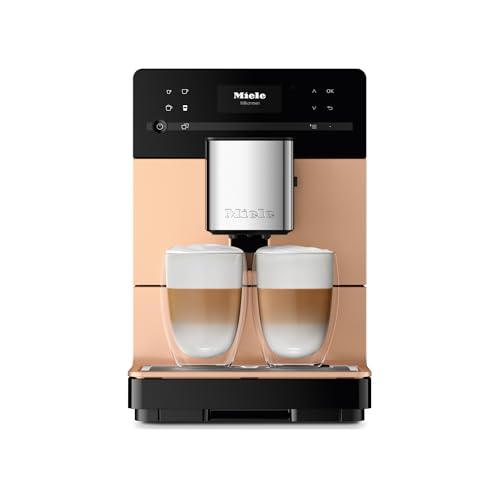
The Miele CM 5510 offers a luxurious, hands-off coffee experience. Its AromaticSystem, which includes a quiet grinder made of wear-resistant steel, is designed to preserve the intense coffee aroma and flavor. With the OneTouch for Two feature, you can prepare two specialty drinks simultaneously, making it perfect for busy mornings or entertaining guests.
This machine can create a wide range of drinks, from espresso and coffee to latte macchiato, and can even prepare up to eight cups at a time with an optional coffee pot. The individual profile settings allow you to save your preferred drink customizations. Finished in a sophisticated Rose Gold Pearl, it combines advanced technology with elegant design.
De’Longhi EC9665M La Specialista Maestro

The De’Longhi La Specialista Maestro is a feature-packed semi-automatic machine that guides you toward barista-level results. Its Sensor Grinding Technology lets you choose from eight grind settings and provides a precise digital dosing guide. This helps eliminate common variables that can affect espresso quality.
A standout feature is the integrated Smart Tamping Station, which ensures you apply the perfect pressure to the coffee grounds every time, reducing mess and guesswork. The machine is designed to work in harmony with its sensors, making the process of grinding, dosing, and tamping more consistent and accessible for home users seeking to improve their technique.
Rancilio Silvia Pro X Espresso Machine

The Rancilio Silvia Pro X is a significant upgrade built on a legendary foundation, featuring a dual boiler system for unparalleled performance. With a dedicated 1-liter steam boiler and a 300ml brew boiler, you can steam milk and pull a shot simultaneously without any temperature drop or compromise.
Precision is key with this machine, thanks to dedicated PID controllers for both the brew and steam circuits. This allows for exact temperature adjustment to the degree, ensuring optimal extraction for different coffee beans. The steam function is on-demand, activating only when needed to maintain brew temperature stability and energy efficiency.
Jura E6 Automatic Coffee Center

Jura is renowned for its high-end automatic machines, and the E6 model brings Swiss engineering to your home with minimal effort required. It is programmed to make six different specialty drinks, including cappuccino, espresso, and milk foam, all at the touch of a button.
The intuitive controls make it easy to find, customize, and brew your favorite beverages. Jura’s Pulse Extraction Process is a key feature, designed to brew coffee with a full, rich bouquet and enhanced flavor. This machine is an excellent choice for those who prioritize convenience and consistency without sacrificing quality.
Breville Barista Touch Espresso Machine

The Breville Barista Touch combines a streamlined, touchscreen interface with serious espresso capabilities. As an all-in-one machine with an integrated grinder, it takes you from beans to espresso in under a minute. The precision conical burr grinder features dose control, delivering the right amount of coffee on demand for maximum flavor.
Breville’s low pressure pre-infusion function is a critical feature, which gradually increases pressure at the start of the extraction. This helps ensure all the flavors are drawn out evenly from the coffee grounds, resulting in a balanced and nuanced tasting cup. It’s designed to make specialty coffee accessible.
Gaggia Classic Evo Pro Espresso Machine
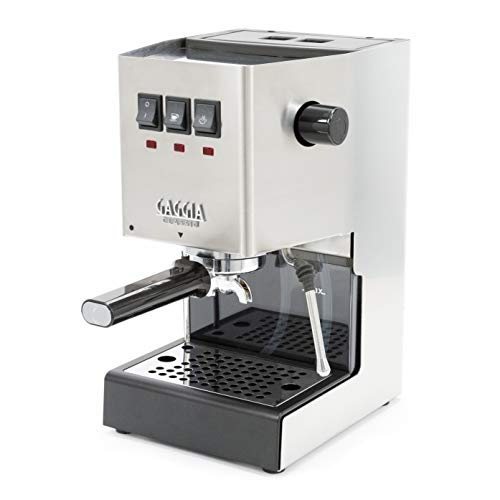
The Gaggia Classic Evo Pro is a stalwart in the home espresso world, known for its robust construction and professional features. Its solid steel housing and commercial-grade 58mm portafilter are hallmarks of a machine built to last. Made in Italy, it is engineered to deliver authentic 9-bar extractions, the industry standard for espresso.
This machine offers a fantastic platform for learning the fundamentals of espresso making, providing the essential tools and performance needed for great results. Its straightforward design gives you full control over the brewing process, making it a favorite among enthusiasts who enjoy the hands-on approach.
Breville Bambino Plus Espresso Machine

The Breville Bambino Plus is celebrated for its compact footprint and impressive speed, delivering professional results without taking up much counter space. It features a 54mm portafilter and is designed to use a 19-gram dose, which is key for achieving full flavor and cafe-quality coffee.
Like its larger Breville siblings, it includes the low pressure pre-infusion function for a balanced extraction. Its main advantage is its ability to heat up in just three seconds, making it one of the fastest machines on the market for pulling a shot. This machine offers serious value for those with limited space or who need quick morning coffee.
Breville Barista Express Impress Espresso Machine

The Breville Barista Express Impress is designed to simplify the most challenging parts of manual espresso making. Its innovative Impress puck system features a smart dosing system that automatically calculates and adjusts the level of fresh coffee for a perfect dose every time. This removes a major variable for beginners.
The system also auto-corrects the next dose based on your previous one, taking the guesswork out of the process. It guides you through tamping with the correct pressure, ensuring a level and consistent coffee puck. This machine is ideal for those who want the manual experience but with intelligent assistance for better consistency.
Breville Barista Touch Espresso Machine
This model offers a modern and intuitive approach to home espresso, centered around a responsive touchscreen display. It integrates a high-quality grinder, tamper, and milk frothing system into one sleek unit, allowing you to create a wide variety of coffeehouse-style drinks with ease.
The touchscreen interface provides guided menus for adjusting grind size, dose, and milk texture, making the process accessible for all skill levels. It delivers on Breville’s promise of bringing third-wave specialty coffee into the home, balancing advanced technology with user-friendly operation for a seamless brewing experience.
Buying Guide: How to Choose an Espresso Machine Under $2000
Stepping into the world of home espresso with a budget of up to $2000 is an exciting place to be. You’re leaving the basic entry-level machines behind and entering a realm where serious quality and prosumer features become accessible. The key is knowing where to put your money to get the best machine for your specific needs. I’ve spent a lot of time with these machines, and I want to help you navigate the most important considerations.
First, let’s talk about the boiler. For me, this is the single biggest decision point. You’ll primarily find three types in this price bracket: single boiler, heat exchange (HX), and dual boiler. A single boiler does one thing at a time—it heats water for brewing, then you switch it to steam mode for milk. It’s a bit slower if you’re making multiple milk-based drinks. A heat exchange machine has one boiler but a clever internal system that lets you brew and steam simultaneously, which is a huge workflow improvement. Then you have the dual boiler, which, as the name suggests, has two separate boilers. One is dedicated to brewing at a perfect, stable temperature, and the other is for steaming. This gives you the ultimate control and speed. If you regularly make lattes for a group, a dual boiler or a good HX machine is a game-changer.
Next up is the pump pressure. Almost all quality machines use a vibration or rotary pump to generate the necessary 9 bars of pressure for extraction. This might sound technical, but here’s the practical difference: rotary pumps are generally quieter, more durable, and can be connected directly to a water line if you choose. Vibration pumps are more common and perfectly effective, but they can be a bit louder. If your kitchen is open-plan and noise is a concern, a machine with a rotary pump is a worthy investment.
Finally, think about your workflow and desired level of involvement. Do you want to grind your beans separately and have full control over the dose and tamp? Then a semi-automatic machine is for you. It gives you the most hands-on experience. If you prefer a bit more convenience, a super-automatic will grind, tamp, and brew at the push of a button, but you sacrifice some control over the final product. Some machines also feature programmable volumetric dosing, which lets you set a specific water volume for a single or double shot, ensuring consistency once you’ve dialed in your grind. When looking for the 10 best espresso machines under $2000 for home use, balancing these factors—boiler type, pump, and control level—will lead you to the perfect machine for your countertop.
Frequently Asked Questions
Is an espresso machine under $2000 really that much better than a cheaper one?
Absolutely. While you can make decent espresso with a less expensive machine, the jump to the under-$2000 category is significant. You’re moving from primarily thermoblock systems to machines with larger, more stable boilers (often heat exchange or dual boiler). This means much better temperature stability during extraction, which is critical for flavor. You also get more robust construction, faster heat-up times, and vastly superior steam power for texturing milk. It’s the difference between a tool that can sometimes make a good shot and a reliable appliance that helps you make great espresso consistently.
Do I need to buy a separate grinder?
Yes, one hundred times yes. I consider the grinder to be even more important than the machine itself. An espresso machine under $2000 is capable of high precision, but it can only work with the coffee grounds you give it. Without a high-quality burr grinder that offers fine, precise adjustments, you will struggle to dial in your shots. Pre-ground coffee or a cheap blade grinder simply won’t cut it. Plan to invest a meaningful portion of your budget—I’d suggest at least a few hundred dollars—into a good espresso-focused grinder to actually enjoy what your new machine can do.
What is the difference between a heat exchange and a dual boiler machine?
This is a common point of confusion. A heat exchange (HX) machine uses one boiler kept at steam temperature. It runs brew water through a tube inside that hot boiler, heating it to the correct brew temperature very quickly. The advantage is you can brew and steam milk at the same time. The potential downside is that brew temperature can fluctuate slightly and may require a cooling flush technique. A dual boiler (DB) has two entirely separate boilers with independent temperature controls. One is set to a perfect brew temperature (e.g., 200°F) and the other to a higher steam temperature. This offers unparalleled temperature stability and simplicity—you just set it and forget it. For pure workflow and control, a dual boiler is the winner, but a well-designed HX machine is also an excellent choice.
How much maintenance is involved with these machines?
Home espresso machines require consistent, but not overwhelming, maintenance. Daily, you’ll rinse the group head and steam wand and wipe down the drip tray. Backflushing with water should be done weekly if your machine has a three-way solenoid valve, and with detergent once a month. The most critical task is descaling, which depends on your water hardness. Using filtered water can significantly extend the time between descaling cycles. It sounds like a lot, but it becomes a quick part of your routine and is essential for protecting your investment and ensuring your coffee always tastes its best.
Can I plumb in an espresso machine in this price range?
Some models in this category offer optional plumbing kits, especially those equipped with the quieter rotary pumps I mentioned earlier. This allows you to connect the machine directly to your home’s water line, eliminating the need to refill a reservoir. It also typically includes a direct drain line for the drip tray. This is a fantastic convenience for high-volume homes but requires a more permanent installation near a water source. If you’re not ready for that, nearly all machines also come with a large removable water reservoir, giving you the flexibility to place the machine anywhere.