Kenyan coffee holds a legendary status among connoisseurs, renowned for its vibrant acidity, complex fruit notes, and exceptional clarity of flavor. The country’s high-altitude farms, rich volcanic soil, and meticulous grading system, particularly the prized AA classification, contribute to a cup profile that is both intense and elegantly balanced. From the bright, winey notes of classic AA lots to the unique concentration of Peaberry beans, the diversity within this single origin is remarkable.
Navigating the options to find your perfect bag can be a journey in itself. This roundup is designed to guide you through some of the best Kenyan coffees available today, highlighting the distinct characteristics of each offering. Whether you prefer a light, tea-like roast or a fuller, darker profile, there is a Kenyan coffee here to match your taste and brewing style.
The Best Kenyan Coffee Beans You Can Buy
- Kenya AA Coffee, 100% Pure, Whole Bean, Fresh Roasted
- Fresh Roasted Coffee, Kenya AA, 2 lb, Med-Dark Roast
- Screen 18 Specialty Grade Premium Kenya AA Coffee Beans
- Teasia Coffee, Kenya AA, Single Origin, Medium Roast
- Kenya Peaberry Coffee, Whole Bean, Single Origin
- Ethiopian Bold Light Roast Coffee, Gourmet Single-Origin
- Coffee Bean Direct Kenya AA, Whole Bean Coffee, Light Roast
- Stumptown Coffee Roasters, Medium Roast Organic Whole Bean
- Kicking Horse Coffee Kenya AA Medium Roast Whole Bean
Kenya AA Coffee, 100% Pure, Whole Bean, Fresh Roasted

This Kenya AA coffee presents a classic flavor profile that showcases why this origin is so highly regarded. You can expect a rich body and a pleasant, vibrant acidity accompanied by distinct tasting notes of raspberry, cranberry, and fresh-cut redwood, with a fragrant, floral aroma. It’s a complex and satisfying cup that exemplifies the best traits of Kenyan beans.
A significant benefit of this coffee is its commitment to quality and safety. The beans undergo rigorous phytosanitary testing before export and are analyzed for mycotoxins and mold upon arrival. Roasted at temperatures over 400°F, this process is designed to deliver a fresh and pure coffee experience you can feel good about.
Fresh Roasted Coffee, Kenya AA, 2 lb, Med-Dark Roast
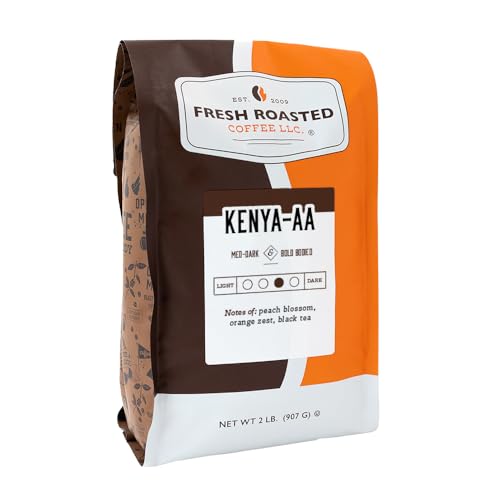
For those who appreciate a slightly deeper roast while maintaining the character of the bean, this Kenya AA offering is an excellent choice. The medium-dark roast level develops notes of peach blossom, orange zest, and black tea, creating a cup that is bright and sweet yet balanced with a richer body. It uses a blend of classic SL28, SL34, and Ruiri 11 varietals.
This coffee is fully washed and dried on raised beds, a process that enhances its clean taste. As with all products from this roaster, it is Kosher certified, sustainably sourced, and roasted in the USA, ensuring a consistent and high-quality product in a generous two-pound bag.
Screen 18 Specialty Grade Premium Kenya AA Coffee Beans

This coffee emphasizes the importance of bean size and density with its “Screen 18” designation. Beans grown at high elevations are larger and denser, which often contributes to a superior and more complex flavor profile. This selection promises the consistently rich fruit and berry flavor, deep wine-like acidity, and pleasing aroma that Kenyan coffee is famous for.
Roasted to a medium-dark level, these 100% Arabica beans are crafted to bring out their unique, bold, and juicy characteristics. If you are looking for a gourmet coffee that focuses on the highest physical grade of bean, this Screen 18 specialty grade option is made for you.
Teasia Coffee, Kenya AA, Single Origin, Medium Roast

Teasia’s take on the Kenya AA highlights the bean’s origin on volcanic soils at high altitudes, conditions that allow for slow growth and concentrated flavor development. The result is a coffee with a full body, rich and strong flavor, and a pleasant acidity that coffee enthusiasts seek.
The beans are wet-processed, a method that ensures a clean taste and bright acidity by removing the fruit before drying. Artisanally roasted to a medium level, this coffee presents a fragrant floral aroma with a winey finish and distinct berry and citrus overtones, making for a very classic and well-executed Kenyan cup.
Kenya Peaberry Coffee, Whole Bean, Single Origin

For a unique twist on Kenyan coffee, consider the Peaberry variety. Unlike flat-sided regular beans, Peaberries are a single, round bean formed inside the coffee cherry. They are often separated and roasted separately, believed to produce a brighter acidity and more concentrated flavor.
This particular Peaberry coffee is described as full-bodied with a sharp acidity and the distinctive winy flavor of black currants. It undergoes the same rigorous testing for mold and impurities as its AA counterpart from the same roaster, ensuring a safe and high-quality product that highlights the unique characteristics of the Peaberry bean.
Ethiopian Bold Light Roast Coffee, Gourmet Single-Origin

While not a Kenyan coffee, this Ethiopian offering provides an interesting contrast for those who enjoy complex African coffees. It undergoes a unique drying process where the fruit pulp is left on the bean, which often imparts intense fruity and wine-like flavors, a characteristic it shares with some Kenyan coffees but expressed differently.
Roasted to a light level, these beans deliver an intensely bright and clean cup with pronounced notes of lemon tart, raw honey, and floral nectar. Small-batch roasting ensures that the delicate and vibrant flavors of this single-origin coffee are preserved and highlighted in every bag.
Coffee Bean Direct Kenya AA, Whole Bean Coffee, Light Roast

This Coffee Bean Direct offering focuses on the prized AA grade, explaining that the designation is based on the size, shape, and density of the beans. Grown in Kenya’s rich volcanic soil, these beans are known for a sharp, winey flavor and a distinct fruitiness that stands out.
The roast profile here is particularly interesting; it’s a light roast but taken a bit darker than typical light roasts to better develop the subtle flavor notes, without making the beans oily. This approach aims to offer a unique balance, providing the brightness of a light roast with a slightly more developed body and complexity.
Stumptown Coffee Roasters, Medium Roast Organic Whole Bean

Stumptown’s Holler Mountain blend is a versatile and organic option that has been a customer favorite for years. While not a single-origin Kenyan coffee, its flavor profile includes a burst of citrus and berry jam, notes that will appeal to those who enjoy the fruity characteristics of East African coffees.
This blend is designed for versatility, performing well as both a drip coffee and a great espresso. With its rounded-out notes of creamy caramel and hazelnut, it offers a complex yet approachable cup that is both organic and made from 100% Arabica beans.
Kicking Horse Coffee Kenya AA Medium Roast Whole Bean
Kicking Horse Coffee is a well-known brand celebrated for its robust and flavorful coffees. Their take on the Kenya AA, roasted to a medium level, is sure to bring forward the bean’s inherent brightness and complex fruit notes. While specific details for this listing are limited, the brand’s reputation for quality provides a strong assurance of a satisfying cup.
As a medium roast from a reliable roaster, this coffee is likely to strike a balance between the vibrant acidity of the bean and a smooth, developed body. It represents a solid choice for those familiar with and trusting of the Kicking Horse brand who want to experience their interpretation of a classic Kenyan AA.
What to Look For in the Best Kenyan Coffee
When I’m hunting for a great bag of Kenyan coffee, I focus on a few key things that make it stand out from the rest. The first and most important detail is the grade. Kenya has a strict grading system based on bean size and density. You’ll often see AA, which are the largest beans. While AA is excellent, don’t sleep on AB grades—they’re slightly smaller but can be just as flavorful, and sometimes even better value. The grade is a good starting point for quality, but it’s not the whole story.
Next, I always check the roast date. This is non-negotiable for me. Coffee is a fresh product, and its peak flavor is within a few weeks of roasting. I avoid any bag that doesn’t have a clear “roasted on” date. For Kenyan beans, which are known for their bright, complex acidity, freshness is everything. Stale coffee loses that vibrant character that makes it so special.
The region within Kenya is another big clue. Most of the top-tier coffee comes from areas like Nyeri, Kirinyaga, and Kiambu around Mount Kenya. Each region has subtle differences. Coffees from Nyeri often have a full body and winey acidity, while Kirinyaga might be a bit brighter and more complex. Knowing the region helps me anticipate the flavor profile I’m about to get.
Finally, I look for information on the processing method. The vast majority of the best Kenyan coffee you can buy today is processed using the “Kenyan method,” a double-fermentation washed process. This is what gives Kenyan coffee its signature clean, bright, and fruity cup. It’s a hallmark of quality. If the bag mentions a specific estate or cooperative, that’s a great sign of traceability and care. By paying attention to these details—grade, roast date, region, and process—I can consistently find a bag that delivers that incredible, juicy, and complex cup I’m looking for.
Frequently Asked Questions
What makes Kenyan coffee taste so different?
Kenyan coffee has a signature flavor profile that’s hard to miss. It’s famous for its bright, wine-like acidity and its complex fruity notes. I often taste things like blackcurrant, grapefruit, berry, and sometimes even tomato. This unique taste comes from a combination of factors: the specific SL28 and SL34 coffee varieties grown there, the rich volcanic soil, high altitudes, and perhaps most importantly, the unique Kenyan washing process that involves a double fermentation. This method enhances the clarity and brightness of the cup, making it truly distinctive.
Is Kenyan AA coffee the best?
It’s a common belief, but it’s a bit of a simplification. AA refers to the size of the bean—it’s the largest screen size. A larger bean can often mean a denser bean that roasts more evenly, which can contribute to a great cup. However, a smaller AB bean from the same farm and harvest can have just as much, if not more, flavor. The grade is a good indicator of bean size and density, but it doesn’t automatically mean it’s the most flavorful. I’ve had incredible AB lots that were more complex than some AA coffees. So, while AA is a reliable mark of physical quality, don’t discount other grades.
How should I brew Kenyan coffee at home?
To really highlight what makes this coffee special, I prefer brewing methods that accentuate its clarity and acidity. My go-to methods are a pour-over like a Hario V60 or a Chemex. These allow the delicate fruity and floral notes to shine through. I use a medium grind, similar to coarse sand, and water just off the boil. If you prefer immersion brewing, a French press can also produce a wonderfully full-bodied cup that captures the deep, juicy flavors. I’d suggest avoiding very dark roasts, as they can overpower the natural characteristics that make Kenyan coffee so sought after.
Why is Kenyan coffee often more expensive?
You’ve probably noticed the price tag is a bit higher than coffees from some other origins. There are a few reasons for this. The auction system in Kenya creates a competitive environment where the highest-quality lots command top dollar. The meticulous process—from hand-picking only the ripest cherries to the labor-intensive double-fermentation washing method—adds significant cost. Furthermore, the specific reputation for quality means there’s high global demand. When you buy a bag of the best Kenyan coffee you can buy today, you’re paying for that entire chain of quality and care, which ultimately results in a truly exceptional cup.